4 Pillars of Oxygen Reform
4 Pillars of Oxygen Reform
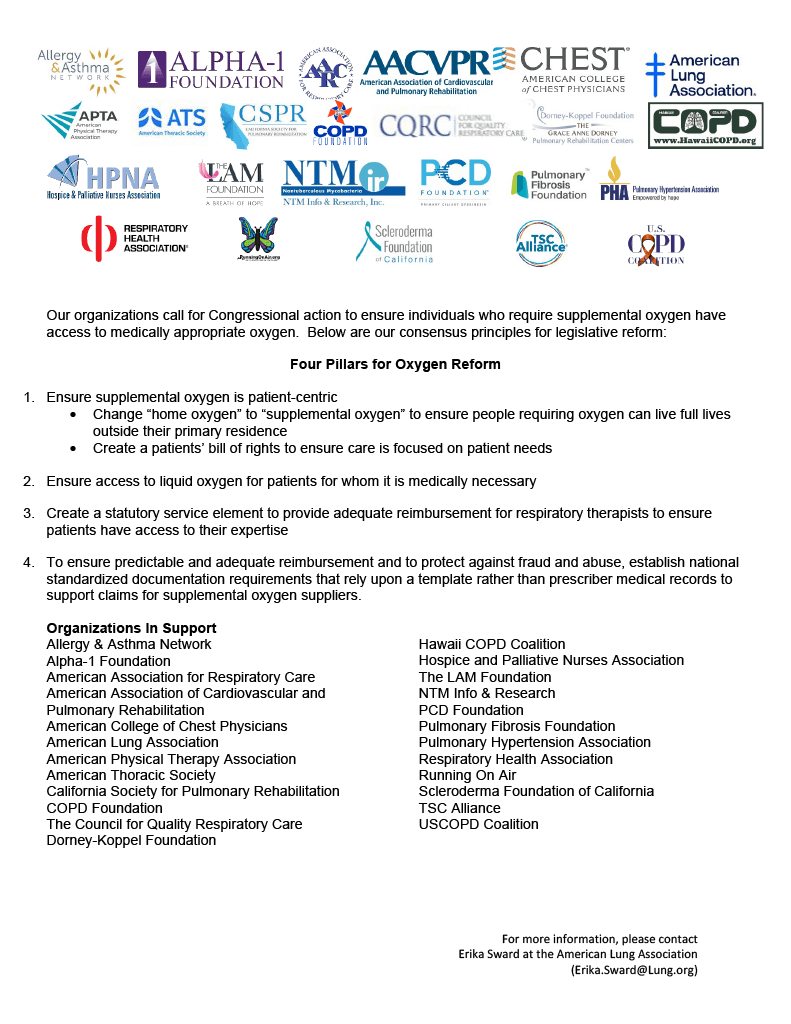
In July 2022 Running On Air joined 24 other nonprofit and patient advocacy organizations to show our commitment for supplemental oxygen access and equity for all who need it. You can see the document below.
What are the 4 pillars of oxygen reform?
- Ensure supplemental oxygen is patient-centric. Change “home oxygen” to “supplemental oxygen” to ensure people requiring oxygen can live full lives outside their primary residence. Create a patients’ bill of rights to ensure care is focused on patient needs.
- Ensure access to liquid oxygen for patients for whom it is medically necessary.
- Create a statutory service element to provide adequate reimbursement for respiratory therapists to ensure patients have access to their expertise.
- To ensure predictable and adequate reimbursement and to protect against fraud and abuse, establish national standardized documentation requirements that rely upon a template rather than prescriber medical records to support claims for supplemental oxygen suppliers.
Why are these reforms needed?
Access to appropriate supplemental oxygen has been a problem for years. In 2011 the Durable Medical Equipment and Prosthetic Supply Program implemented a completive bidding program for Medicare. Previous to this, liquid oxygen was widely available to patients with high flow needs. High flow is considered 4 liters of oxygen or more. Liquid oxygen can be a better option than gas oxygen because the patient can receive more oxygen from a similarly sized tank, at the same flow rate. This means carrying a lighter weight tank, which will last longer.
Once the competitive bidding process was implemented though, cost effectiveness replaced patients’ needs. Many patients who had been using liquid oxygen for years had the liquid oxygen removed. They instead received large, cumbersome tanks. Unfortunately, for many patients, this meant they were not able to continue living their lives the way they had. Many have become homebound.
If you are familiar with supplemental oxygen and portable oxygen concentrators (POC), you may ask “Why not use a POC like the ones advertised on TV?” This is because these lightweight units do not meet high flow needs. In fact, most of the models under 5 pounds don’t even give 2 liters of oxygen.
Impact on Patients
The video SOS for Breath: The Medicare Oxygen Therapy Access Crisis, made by the COPD Foundation, is very informative about the impact on patients.
Below are a few statistics mentioned in the video:
According to Medicare data (which means this is only for supplemental oxygen users 65 and up) between 2013 and 2019
- Medicare beneficiaries on POC increased 115%
- Standard tank usage increased 22%
- The companies supplying supplemental oxygen decreased by 39%
- Liquid oxygen user decreased by 89%
- The companies supplying liquid oxygen decreased by 73%